
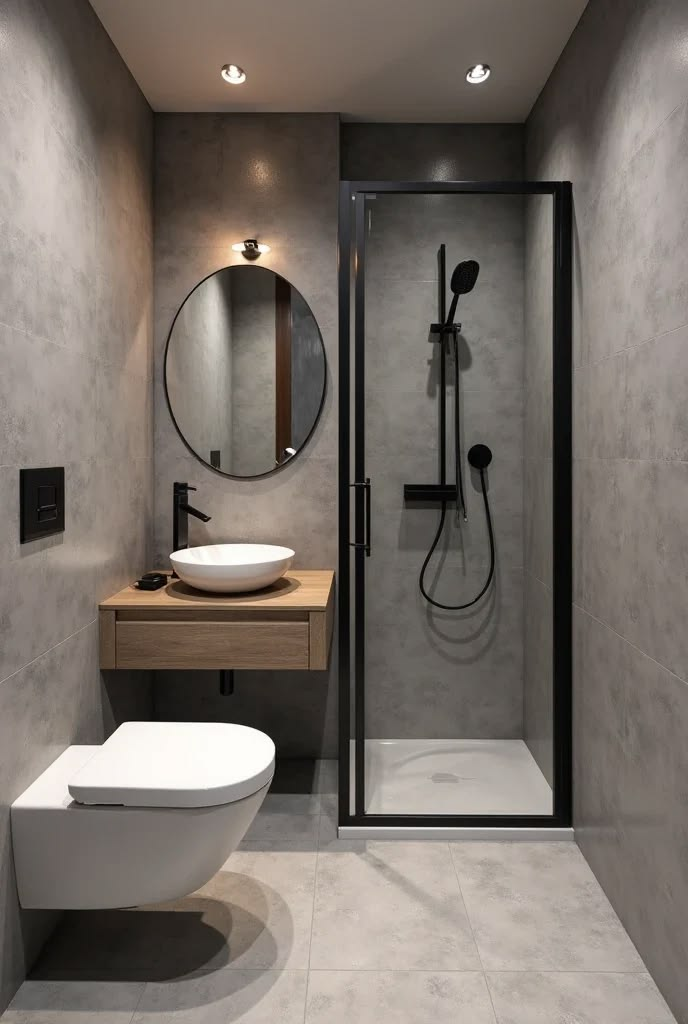
When we moved into our current place, the bathroom was the first thing that made me sigh. It was small — genuinely small — with barely enough room to turn around comfortably. My first instinct was to wish for a bigger space.
But after a few months of experimenting, I actually love that bathroom now. It’s one of the most put-together rooms in the house. What changed wasn’t the size — it was the approach. Here’s everything I learned about making a small bathroom work.
Color Is the Single Most Powerful Tool You Have
Before you buy anything or change anything, consider your color choices. In a small bathroom, color determines almost everything about how the space feels.
Dark colors absorb light and make walls feel like they’re closing in. Light colors reflect light and push the walls back visually — the room doesn’t get bigger, but it feels bigger, which is really what matters.
Best colors for small bathrooms:
- White — the most reliable choice, makes everything feel clean and open
- Light grey — modern without feeling cold
- Warm beige or cream — soft and inviting
- Soft pastel tones — add personality without heaviness
Stick to one or two tones rather than mixing multiple colors. Simplicity is your friend in a small space.
A Large Mirror Does More Work Than Almost Anything Else
If there’s one single upgrade I’d recommend for a small bathroom, it’s replacing a small mirror with a large one. The difference is genuinely remarkable.
A large mirror reflects both light and the rest of the room, creating the impression of depth and space that isn’t physically there. It also bounces light around, making the room brighter without adding any fixtures.
Options that work well:
- A large wall mirror that spans nearly the full width above the sink
- A mirrored cabinet that provides storage and reflection at once
- A round frameless mirror for a softer, modern look
Wall-Mounted Storage Keeps the Floor Open
Floor space is your most valuable resource in a small bathroom. The more of it you can keep clear and visible, the larger the room will feel.
Wall-mounted storage is the answer:
- Floating shelves above the toilet or beside the sink
- Wall-mounted cabinets with doors
- Hanging racks for towels and accessories
Every storage item you move off the floor makes the room breathe more easily.
Minimal Design — Don’t Fight the Space
Small bathrooms and heavy decoration don’t work well together. The more visual information you add — patterns, colors, decorations, products on display — the more cramped the space feels.
The approach that consistently works is restraint. Choose a few things you genuinely love and let them be the focal points. Keep everything else simple and clean.
What to avoid in a small bathroom:
- Heavy patterned curtains or rugs that compete visually
- Multiple different colors in tiles, walls, and accessories
- Decorating every available surface
- Large pieces of furniture that block movement
Good Lighting Makes a Bigger Difference Than People Expect
A small bathroom with bad lighting feels like a dark closet. The same bathroom with good lighting feels workable, clean, and much more comfortable.
Lighting improvements for small bathrooms:
- Bright LED bulbs that give good visibility without harsh shadows
- Lights positioned at eye level near the mirror rather than only overhead
- Mirror lights or an LED mirror for even, flattering light
- Keeping the light tone warm white rather than cold white
If your bathroom has a window, keep it as unobstructed as possible to maximize natural light.
Use Vertical Space Wherever Possible
Small bathrooms can’t expand sideways, but they can always go up. Vertical storage — tall cabinets, shelves that reach toward the ceiling, hanging baskets — uses space that’s otherwise completely wasted.
Over-the-toilet shelving is one of the best examples of this. The space is always there, it’s always empty, and a simple shelf unit turns it into meaningful storage without taking any floor space.
Compact Fixtures Make Movement Easier
Standard-sized fixtures in a small bathroom can make it feel genuinely difficult to move around. Choosing compact alternatives designed for smaller spaces solves this without any compromise in function.
Space-saving options:
- Wall-hung toilets that float above the floor and visually open up space
- Smaller sink basins or pedestal sinks
- Compact vanities that provide storage without bulk
These aren’t just aesthetic choices — they genuinely make the bathroom more comfortable to use day to day.
Glass Shower Doors Instead of Curtains
Shower curtains close off a section of the bathroom visually — they create a barrier that makes the room feel divided and smaller. Glass panels, even simple clear ones, keep the visual space open and connected.
If replacing the shower setup entirely isn’t possible, even a clear curtain is better than a solid colored or patterned one. Keeping that visual openness makes a meaningful difference in how large the bathroom feels.
Keep Decor Simple and Intentional
Small bathrooms can still have personality — they just need it delivered in small, deliberate doses. One small plant, one piece of wall art, a set of matching accessories — that’s enough. More than that starts to compete with the space itself.
Decor that works well in small bathrooms:
- A single small plant on a shelf or windowsill
- Neutral-toned towels in a consistent color
- One or two decorative jars on the counter
- Simple, minimal wall art in a small frame
The goal is to add warmth without adding visual weight.
Matching Accessories Create Instant Cohesion
One of the cheapest and easiest ways to make a small bathroom look designed rather than random is to match your accessories. When your soap dispenser, toothbrush holder, and storage containers share a color or finish, the space automatically looks more intentional.
You don’t need expensive versions — affordable matching sets from any home goods store do the job perfectly well.
A Small Plant Goes a Long Way
Plants in a bathroom add something that’s genuinely difficult to replicate with any other decor element — they add life. A small plant on a shelf or beside the sink softens the space, adds a touch of natural color, and makes the room feel fresher.
Good options for bathrooms:
- Pothos — thrives in humidity and low light
- Snake plant — extremely low maintenance
- Small succulents for a sunny windowsill
- Artificial plants if natural light is very limited
Common Small Bathroom Decorating Mistakes
Things that consistently make small bathrooms feel worse rather than better:
- Dark paint colors that close the walls in
- Too many decorations competing for attention
- Poor lighting that makes the space feel dim and small
- Overcrowding storage shelves so they look cluttered
- Ignoring the wall space and only using floor storage
Frequently Asked Questions
How can I make a small bathroom look bigger?
Use light colors, a large mirror, glass shower panels, and good lighting. Keep surfaces clear and floor space as open as possible. These changes work together to create a sense of space that goes beyond the actual square footage.
What’s the best color for a small bathroom?
White is the most reliable choice — it reflects light well and makes the space feel clean and open. Warm beige and light grey are excellent alternatives if you want something slightly warmer.
How do I decorate a small bathroom on a tight budget?
Focus on the changes that deliver the most visual impact: a large mirror, better lighting, matching accessories, and a small plant. These are all affordable and collectively transform how the bathroom looks and feels.
Is it worth renovating a small bathroom or better to work with what’s there?
In most cases, working with what’s there — using smart design choices, better storage, and intentional decor — delivers surprisingly good results without the cost and disruption of renovation. Renovation makes sense when the layout itself is problematic.
Final Thoughts
A small bathroom doesn’t need to be a compromise. With the right color choices, smart storage, good lighting, and a restrained approach to decoration, it can be one of the most comfortable and well-designed spaces in your home.
The key is working with the space rather than fighting it. Keep it light, keep it simple, keep it organized — and a small bathroom can feel genuinely pleasant every single day.