
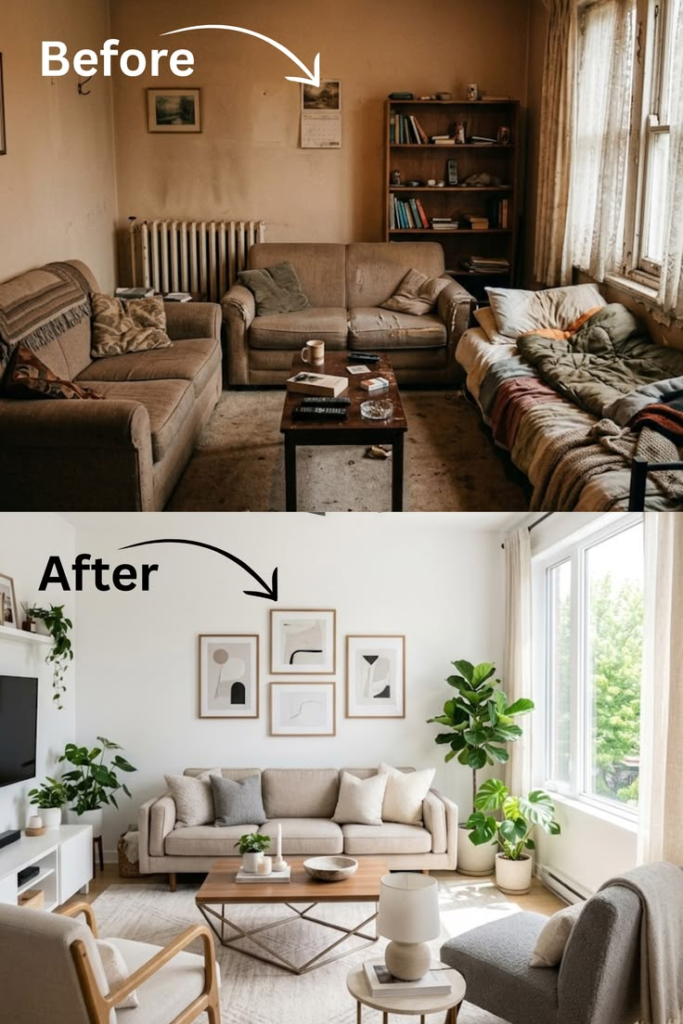
A small living room can sometimes feel cramped, cluttered, and difficult to decorate. However, size doesn’t have to limit style or comfort. With the right design techniques, you can create the illusion of a larger, brighter, and more open space without knocking down walls or spending a fortune on renovations.
Whether you live in an apartment, condo, or compact home, these practical ideas will help you maximize every square foot while making your living room feel significantly bigger.
Choose Light Colors for Walls
One of the most effective ways to visually expand a room is by using light colors.
Popular choices include:
- Soft White
- Warm Beige
- Light Gray
- Cream
- Greige
Light colors reflect natural and artificial light, making the room feel more open and airy.
Dark colors can still be used as accents, but lighter shades generally work best for small spaces.
Maximize Natural Light
Natural light instantly makes any room feel larger.
To increase natural brightness:
- Use sheer curtains
- Keep windows unobstructed
- Remove heavy drapes
- Clean windows regularly
- Position furniture away from windows
The more sunlight you allow into the room, the more spacious it will appear.
Add a Large Mirror
Mirrors are one of the oldest interior design tricks for making small spaces feel bigger.
A large mirror can:
- Reflect light
- Create depth
- Double the visual space
- Brighten dark corners
For maximum impact, place a mirror opposite a window to reflect natural light throughout the room.
Use Multi-Functional Furniture
In a small living room, every piece of furniture should serve a purpose.
Consider:
- Storage ottomans
- Sofa beds
- Nesting tables
- Lift-top coffee tables
- Storage benches
These furniture pieces help reduce clutter while maximizing functionality.
Choose Furniture with Exposed Legs
Furniture with visible legs creates a sense of openness because more floor space remains visible.
Examples include:
- Mid-century modern sofas
- Accent chairs with slim frames
- Raised coffee tables
- Open shelving units
This simple design choice can make the room feel less crowded.
Avoid Oversized Furniture
Large furniture can overwhelm a small living room.
Instead, choose pieces that are appropriately scaled for the space.
Look for:
- Apartment-sized sofas
- Compact sectionals
- Slim-profile chairs
- Small coffee tables
The goal is to maintain comfortable movement throughout the room.
Declutter and Simplify
Clutter instantly makes a room feel smaller.
Create a cleaner look by:
- Removing unnecessary decorations
- Organizing shelves
- Using hidden storage
- Keeping surfaces clear
A minimalist approach often works best in smaller living rooms.
Use Vertical Space
When floor space is limited, think upward.
Add:
- Floating shelves
- Wall-mounted storage
- Tall bookcases
- Hanging planters
Vertical storage helps keep the room organized without sacrificing valuable floor area.
Select the Right Rug Size
Many homeowners mistakenly choose rugs that are too small.
A larger rug can actually make a room appear bigger by visually connecting furniture pieces.
Ideally:
- The front legs of the sofa should sit on the rug.
- The rug should define the seating area.
This creates a more cohesive and spacious appearance.
Keep Window Treatments Simple
Heavy curtains can visually shrink a room.
Instead, opt for:
- Sheer curtains
- Linen drapes
- Neutral-colored fabrics
Mounting curtain rods higher than the window frame can also create the illusion of taller ceilings.
Create a Consistent Color Palette
Too many colors can make a room feel busy and fragmented.
Stick to a cohesive palette using:
- Neutral shades
- Soft accent colors
- Coordinated furniture and accessories
A consistent color scheme creates visual flow and openness.
Use Glass and Acrylic Furniture
Transparent furniture takes up less visual space.
Popular options include:
- Glass coffee tables
- Acrylic side tables
- Clear chairs
These pieces help maintain an open and airy feel.
Incorporate Smart Lighting
Proper lighting can dramatically affect how spacious a room feels.
Layer different light sources such as:
- Ceiling fixtures
- Floor lamps
- Table lamps
- Wall sconces
Well-lit rooms always appear larger and more welcoming.
Keep Decor Minimal
Modern small-space design embraces simplicity.
Instead of filling every shelf and wall, focus on a few carefully selected items such as:
- Large artwork
- Decorative plants
- Stylish vases
- Statement mirrors
A cleaner aesthetic helps the room feel larger.
Add Indoor Plants
Plants bring life and freshness to a living room without overwhelming the space.
Good options include:
- Snake Plant
- Pothos
- ZZ Plant
- Monstera
Use plants strategically to soften corners and add visual interest.
Float Furniture Away from Walls
Many people automatically push furniture against walls in small rooms.
Surprisingly, floating furniture slightly away from the wall can create better flow and make the room feel larger.
Even a few inches of space can make a noticeable difference.
Use Built-In Storage Solutions
Built-in shelving and cabinets maximize storage while maintaining a streamlined appearance.
Benefits include:
- Reduced clutter
- Better organization
- Improved functionality
- Cleaner design
Built-ins are especially useful in compact living areas.
Common Mistakes That Make Small Living Rooms Feel Smaller
Avoid these common design mistakes:
- Using oversized furniture
- Blocking natural light
- Overdecorating
- Choosing dark wall colors everywhere
- Using multiple competing color schemes
- Ignoring storage solutions
Correcting these issues can instantly improve the room’s appearance.
Frequently Asked Questions
What color makes a small living room look bigger?
Light colors such as white, cream, beige, and light gray help reflect light and create the illusion of more space.
Do mirrors really make a room look larger?
Yes. Mirrors reflect light and add visual depth, making rooms appear larger than they actually are.
Should furniture be against the wall in a small living room?
Not always. Pulling furniture slightly away from walls can improve flow and make the space feel more open.
How do I make my living room look expensive on a budget?
Focus on decluttering, improving lighting, using coordinated colors, adding large artwork, and incorporating a few high-quality decorative accents.
Conclusion
Making a small living room look bigger doesn’t require major renovations. By using light colors, maximizing natural light, choosing appropriately sized furniture, incorporating mirrors, and reducing clutter, you can create a space that feels bright, open, and inviting.
The key is to focus on smart design choices that enhance both functionality and visual spaciousness. With these simple techniques, even the smallest living room can feel comfortable, stylish, and surprisingly roomy.