
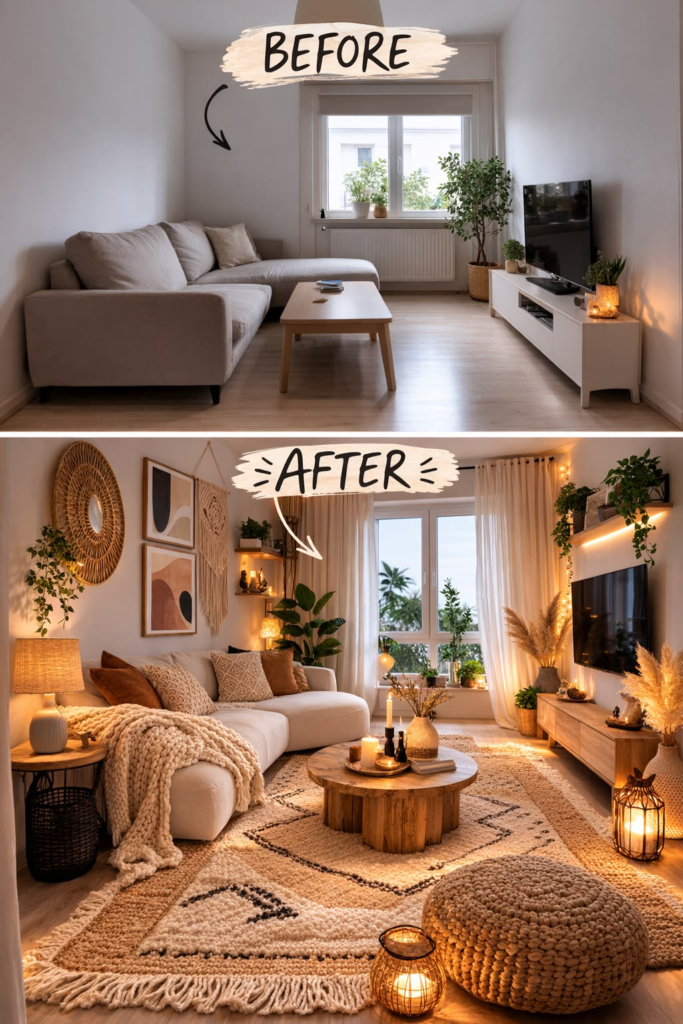
There’s a specific kind of restlessness that hits on a Friday evening when you look around your home and think — this needs to change. Not a full renovation, not a new apartment, just something different. Something fresher.
I’ve had that feeling more times than I can count. And I’ve learned that two days — one proper weekend — is genuinely enough to make a space feel significantly better, as long as you focus on the right things. Here’s what actually works.
Start with Rearranging — It Costs Nothing and Changes Everything
Before buying a single thing, move what you already have. Furniture rearrangement is the most underrated weekend project because it’s completely free and the results can be dramatic.
Most people arrange furniture once when they move in and never touch it again. But the first arrangement is rarely the best one — it’s usually just the most obvious one.
Things worth trying:
- Moving the sofa to a different wall to change the room’s focal point
- Pulling furniture away from the walls slightly — rooms feel less like waiting rooms when furniture floats in the space
- Creating a clear path through the room so movement feels natural
- Rethinking the bed position in a bedroom — facing a different direction genuinely changes how the room feels to wake up in
Give yourself an hour to experiment. Move things, stand back, assess. You might be surprised how different the same room can feel with the same furniture in a different arrangement.
Create a Gallery Wall on Saturday Morning
A gallery wall sounds more complicated than it is. The basic idea is simple: a group of frames on a wall, arranged in a way that feels balanced and intentional rather than random.
What makes it work:
- A consistent frame style or color — matching black frames, or all natural wood, or all white. Mixing every possible frame style is what makes gallery walls look chaotic.
- A mix of sizes — one or two larger pieces anchoring the arrangement with smaller pieces around them
- Content that means something — actual photos, printed artwork you love, travel memories
The approach that removes most of the stress: lay everything out on the floor first. Arrange until you like it, take a photo, then transfer to the wall. No guessing, no unnecessary holes.
Make Your Own Wall Art — It’s Easier Than You Think
You don’t need artistic talent to create wall art that looks genuinely good. Abstract art in particular is forgiving — there are no rules about what it should look like, which means it’s almost impossible to do it wrong.
Simple ideas that work for beginners:
- A canvas with a few overlapping colors, applied loosely with a wide brush — abstract color field
- Thin black lines on a white canvas — minimal line art that looks surprisingly elegant
- Geometric shapes in two or three colors — tape off sections, paint, remove tape
- A single large brushstroke in one color on a white background
The key is to keep it simple. The simplest pieces are often the ones that look most intentional and modern. And even if it doesn’t turn out perfectly, handmade art has a warmth that prints from a shop don’t.
Declutter One Room Completely — Choose the Worst One
Pick the room that bothers you most and spend a few hours on Saturday giving it a proper declutter. Not a tidy — a real, honest assessment of what belongs there and what doesn’t.
The process that works:
- Remove everything from surfaces and shelves
- Clean every surface while it’s clear
- Put back only what genuinely belongs there
- Find a proper home for everything else — store it, donate it, or throw it away
A thoroughly decluttered room looks completely different even if you haven’t added a single new thing. The space itself becomes visible again.
Change the Cushions and Textiles — Fastest Visual Update Available
Swapping soft furnishings is one of those changes that seems too simple to make much difference — until you do it. New cushion covers on the sofa, a different throw blanket, updated bedsheets — these changes take minutes and the room feels noticeably different.
The approach that works best: choose a color story first. What two or three colors do you want in the space? Then choose cushions and textiles that stay within that palette. When everything coordinates, the room feels deliberately designed rather than randomly assembled.
This doesn’t require buying new cushions — just new covers. It’s significantly cheaper and gives you the same result.
Add One or Two Plants
Plants are one of the most reliably effective home decor additions available. They add life, color, and a quality that manufactured decor items can’t replicate — and they’re usually very affordable.
For a weekend project, focus on positioning rather than volume. One well-placed plant in the right spot does more than five plants scattered randomly. A snake plant in a corner, a trailing pothos on a shelf, a small succulent on a windowsill — each one placed thoughtfully looks better than a crowded collection.
Good weekend plant options:
- Snake plant — structural, handles low light, very hard to kill
- Pothos — grows quickly, looks good trailing from a shelf
- Peace lily — elegant in indirect light
- Small succulents — minimal maintenance, work well in groups of three
Install Floating Shelves — One Afternoon Project
Floating shelves look like they require significant skill to install, but they’re genuinely manageable as a weekend project. Basic tools, a level, wall anchors, and an afternoon is all it takes.
The visual payoff is significant. A few floating shelves on a bare wall adds storage, displays plants and decor, and makes the wall look intentional rather than empty.
Style them simply: a plant, a few books, one or two small objects. Empty space on a shelf is fine — it looks considered rather than incomplete.
Fix the Lighting — It Transforms the Atmosphere
This is one of the changes that people consistently underestimate until they do it. If your main light source is a single overhead ceiling light with a cool white bulb, the room will always feel flat and slightly harsh regardless of how well everything else is decorated.
Weekend lighting upgrades:
- Swap overhead bulbs to warm white LEDs — immediate improvement in atmosphere
- Add a table lamp or floor lamp so you have an alternative to the overhead light
- String fairy lights along a shelf or behind a headboard for soft ambient glow
- Try using only lamps in the evening instead of overhead lights — the difference is significant
Warm, layered lighting makes any room feel more comfortable and more intentional.
Create a Reading or Coffee Corner
If you have even a small underused corner in any room, a weekend is enough time to turn it into a purposeful little space. A comfortable chair, a small side table, a lamp, and a couple of books — that’s genuinely all it takes.
Having a dedicated corner for sitting and reading changes how a room feels because it adds function that wasn’t there before. The room becomes a place for multiple activities rather than just one.
Update the Entryway
The entryway sets the tone for the whole home — it’s what you and everyone you invite sees first. A small amount of weekend effort here has an outsized impact on how the home feels overall.
Simple entryway improvements:
- A wall mirror — makes the space feel larger and is genuinely useful
- Hooks for bags and coats — keeps things organized immediately
- A small console table or shelf for keys and everyday items
- A plant or small vase to add some life
An organized, welcoming entryway makes coming home feel slightly better every single day.
Paint One Accent Wall
If you’re up for a slightly more ambitious project, painting a single accent wall takes one afternoon and transforms the feel of a room. One wall — the one behind the sofa or the bed — is enough to introduce a color that changes the whole room’s atmosphere.
Colors that work well for accent walls:
- Warm terracotta for a grounded, earthy feel
- Sage green for something calm and natural
- Deep navy for drama and sophistication
- Soft warm grey for a quietly modern look
One wall is enough. Four walls in the same strong color is usually too much — one creates impact without overwhelming the space.
Common Weekend Decor Mistakes
Things that consistently make weekend projects less successful:
- Trying to do too many things at once — pick three or four projects and do them properly rather than touching everything superficially
- Buying things before decluttering — you often don’t need anything new, you just need less
- Using too many competing colors in one session
- Starting a project without the right materials and having to stop halfway through
Frequently Asked Questions
What’s the single best weekend project for maximum impact?
Rearranging furniture costs nothing and changes everything. If you’re spending money, updating lighting — swapping to warm white bulbs and adding a lamp — makes the most immediate difference to how a room feels.
How do I plan a weekend decor project properly?
Choose your projects on Friday evening. Make a list of any materials you need and get them Saturday morning. Leave Sunday for anything that took longer than expected or any finishing touches.
Are weekend decor projects worth it if I’m renting?
Absolutely. Most of the most effective weekend projects — rearranging furniture, adding plants, swapping textiles, updating lighting — are completely reversible and require no permanent changes.
Final Thoughts
A weekend is enough to make a real difference. Not a complete transformation, but a genuine improvement — the kind that makes you walk into the space on Monday morning and feel slightly better about it.
Focus on the changes that cost the least and deliver the most: rearrange first, declutter second, then add warmth through lighting and textiles. Buy things only after you’ve done those steps, because you’ll often find you need far less than you thought.