
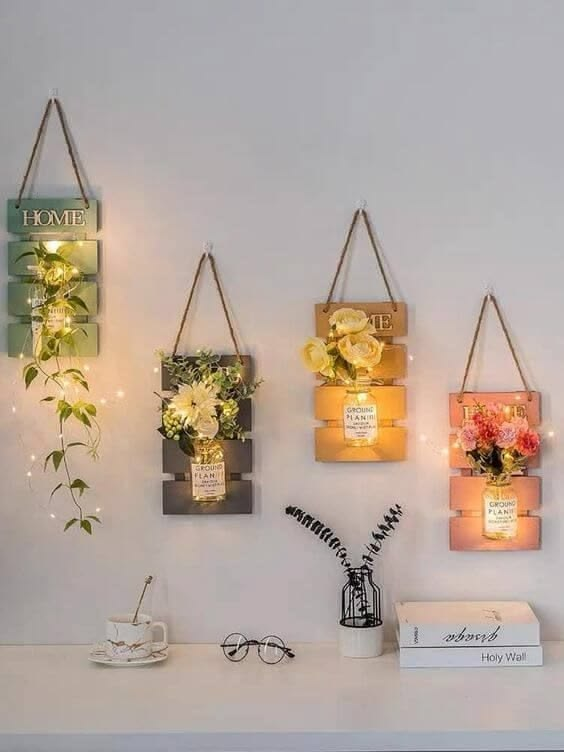
I went through a phase a few years ago where I convinced myself that a well-decorated home required expensive things. That the difference between a beautiful home and an ordinary one was money. Then I visited a friend who had one of the most charming, warm apartments I’d ever been in — and she’d made most of what was in it herself.
A jar with a candle in it on the windowsill. A macrame wall hanging she’d learned from a YouTube video. Painted plant pots on the kitchen shelf. None of it cost much. All of it looked completely intentional and personal.
That visit changed how I thought about home accessories. Here’s what I’ve learned since.
Why DIY Accessories Work So Well
There’s something about handmade items in a home that mass-produced alternatives genuinely can’t replicate. They have slight imperfections that give them character. They reflect the person who made them. They’re by definition unique.
Beyond the aesthetic dimension, making your own accessories is significantly cheaper than buying equivalent items — and more satisfying. There’s a particular pleasure in looking at something in your home and knowing you made it.
Decorative Candle Jars — Easiest Project, Immediate Results
Empty glass jars are one of the most versatile DIY materials available. Clean a pasta sauce jar, a pickle jar, any glass container — and you have the base for something genuinely attractive.
Simple ways to make them look intentional:
- Tie a piece of jute or ribbon around the neck
- Paint the outside partially with chalk paint for a matte, textured effect
- Fill the bottom with decorative stones or dried flowers before adding a tea light
- Cluster three different sizes together on a tray rather than displaying them individually
A group of three mismatched glass jars with candles inside, placed on a small wooden tray, costs almost nothing and looks genuinely elegant.
DIY Flower Vases From Things You Already Have
You don’t need to buy a vase. Almost any container that holds water works — and with a small amount of decoration, everyday objects become something worth displaying.
Glass bottles work particularly well. Wine bottles, sauce bottles, any bottle with an interesting shape. Group three different heights together, put one stem in each, and you have a simple but effective floral arrangement.
For decorating containers:
- Wrap the lower portion in jute rope secured with a small amount of glue — instantly rustic and warm
- Paint with chalk paint for a matte, sophisticated finish
- Leave plain glass as it is — sometimes the simplest version is the best
Wall Hangings — More Achievable Than They Look
Macrame wall hangings look complicated but the basic version is genuinely manageable for a beginner. There are only a few knots involved, and the material — natural cotton rope — is inexpensive and available almost everywhere.
A simple macrame hanging takes two to three hours for a first attempt. The result looks like something you’d buy for significantly more money, and it has a handmade warmth that purchased versions rarely capture.
If macrame feels like too much, fabric wall hangings are even simpler — a piece of interesting fabric or a printed textile mounted on a wooden dowel achieves a similar effect with almost no skill required.
DIY Photo Frames
Plain photo frames are inexpensive, and personalizing them takes very little time.
Simple approaches that look good:
- Paint a plain wooden frame in a single matte color — black, white, warm terracotta
- Wrap a frame in jute rope for a natural, textured finish
- Apply thin strips of washi tape in a geometric pattern
- Group five or six identical plain frames together rather than using one decorated frame
The display matters as much as the frames themselves. A symmetrical grid of identical frames with black and white prints inside looks far more intentional than a random scatter of different frames.
Table Centerpieces That Cost Almost Nothing
A table centerpiece doesn’t need to be elaborate. The simplest versions are often the most effective.
Ideas that consistently work:
- A wooden tray with a candle, a small plant, and one or two stones
- Three candles of different heights grouped together
- A glass bowl filled with lemons or limes — refreshing and surprisingly stylish in a kitchen
- A single stem in a bud vase in the center of a table
The principle: odd numbers (three or five items) look more natural than even numbers, and leaving space between items looks more intentional than crowding them together.
Storage Baskets You Make Yourself
Rope baskets are one of those DIY projects that look impressive but are actually quite simple. Cotton rope, a bit of glue, and patience — that’s genuinely all that’s required for a basic basket.
The technique: coil the rope in a circle, gluing or sewing each layer to the one below it as you work your way up. The result is a functional, attractive basket that looks like something from a boutique home store.
Even simpler: cover a cardboard box with fabric or rope. The structure is already there — you’re just transforming the surface.
Creative Plant Pots
Plants always look better in pots that have some character. And making your own plant pots costs almost nothing.
Approaches that work:
- Paint old terracotta pots in matte colors — a single color per pot, with a group in coordinating colors
- Wrap plain pots in jute rope for a natural texture
- Use old mugs, tin cans, or ceramic bowls as planters — make sure there’s drainage or add a layer of stones at the bottom
- Paint geometric patterns on plain pots with a fine brush
A collection of mismatched pots that share a color palette looks more interesting than identical matching pots, while still feeling coordinated.
DIY Lamps and Lighting Accessories
Simple lighting accessories have a significant impact on atmosphere, and several are genuinely easy to make.
Ideas worth trying:
- A jar lamp: fill a large jar with string lights and put it on a shelf or side table. It gives a warm, diffused glow that’s particularly good in bedrooms.
- Paper lampshades: a cylinder of thick textured paper fitted around a basic bulb holder creates a lamp that looks minimal and modern
- Bottle lamps: a glass bottle with a lamp kit fitted through the top — lamp kits are inexpensive and the transformation is dramatic
Mirror Decoration
A plain mirror becomes a design feature with minimal effort. The frame does most of the visual work, and changing the frame is usually simpler than it looks.
- Rope border: glue natural rope around the existing frame in concentric rings — the effect is immediately warm and bohemian
- Paint the frame in a matte color that contrasts with the wall
- Remove the frame entirely for a clean, frameless look — sometimes the simplest version is the most elegant
- Arrange several small mirrors together on a wall as a group
Handmade Coasters
Coasters are one of those objects that are used constantly but rarely thought about. Making your own takes very little time and the results look genuinely good.
- Cork coasters cut to size and painted or stamped with a simple pattern
- Wood slice coasters — a thin cross-section of a branch, sanded smooth and sealed
- Tile coasters: plain ceramic tiles with painted or stamped designs and felt pads on the bottom
- Rope coasters: a flat spiral of cotton rope, glued together
A set of four or six matching handmade coasters makes a surprisingly good gift as well.
A DIY Key Holder for the Entryway
The entryway is where keys, bags, and everyday items accumulate. A dedicated key holder solves the problem and can be made in an afternoon.
Simple approaches:
- A piece of reclaimed wood with three or four hooks screwed in at regular intervals
- A small painted board with labeled hooks for different family members
- A branch mounted horizontally on the wall with hooks hanging from it — slightly rustic but charming
Common DIY Home Accessory Mistakes
Things that consistently make DIY projects look less successful:
- Using low-quality materials — cheap rope frays, thin paint chips, poor-quality glue fails. A slightly better material makes the finished result look significantly more professional.
- Making things too complicated. The simplest designs are almost always the most elegant. Resist the urge to add more.
- Displaying too many DIY items in one space. A few handmade pieces alongside regular items look intentional. Every surface covered in DIY projects can look overwhelming.
- Ignoring color consistency. Handmade items in different colors that don’t coordinate make a space feel chaotic even if each individual piece is attractive.
Frequently Asked Questions
Do I need special skills for DIY home accessories?
Most beginner-level projects require no prior skill. Start with the simplest ones — decorated jars, painted plant pots, photo frame arrangements — and build confidence from there.
Where do I find materials cheaply?
Jute rope, cork sheets, plain terracotta pots, glass jars, and wooden dowels are all available at hardware stores or craft shops for very little money. Many useful materials are things you already have at home.
How do I make DIY items look professional?
The biggest factor is finishing. Sand wood smooth before painting. Use matte paint rather than glossy for a more sophisticated look. Clean edges and consistent color make handmade items look considered rather than rough.
Final Thoughts
Making your own home accessories is genuinely satisfying in a way that buying equivalent items isn’t. There’s a specific kind of pleasure in looking at something in your home and knowing you made it — and explaining to guests that you did.
Beyond the personal satisfaction, handmade accessories are significantly cheaper than purchased alternatives, and they have a uniqueness that mass-produced items can never have. Your home ends up with things that are genuinely yours, in every sense of the word.